Pushing anger away doesn’t work
If you try to look cool straight after a mistake, you often carry the anger around for longer. Naming it briefly helps more.
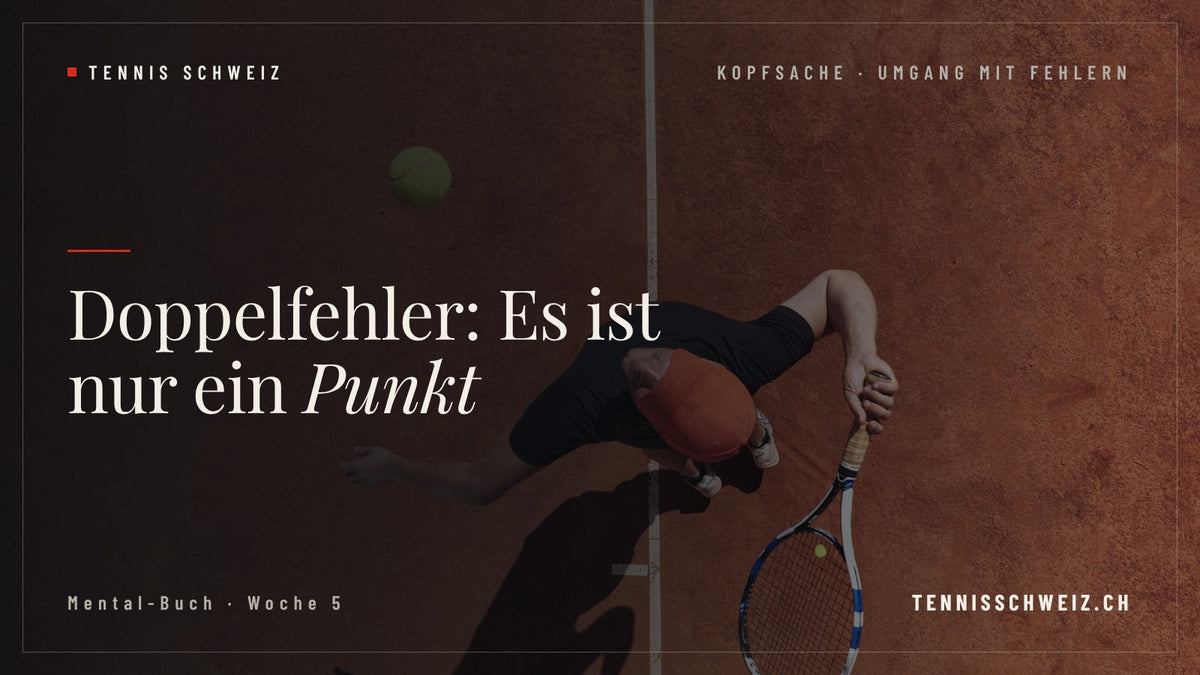
After the missed penalty he does not move a muscle. After the double fault she smiles as if nothing had happened. From the outside it looks composed. Inside, it often keeps boiling.
After a mistake, many players want to look cool straight away. But the anger does not disappear just because you push it away. That is why reacting comes right at the start of the reset routine from the post Back in the game after a mistake.
What happens in your head
In a brain study, researchers observed the amygdala, a kind of alarm system in the brain. Its activity fell as soon as the participants put their feeling into words. A short “That annoys me” is therefore not a sign of weakness. It is the first step towards letting go.
Four typical mistakes in dealing with anger
- Pushing it away: You act as if nothing has happened. The anger stays and shows up two points later in a tense arm. Better: name it briefly, in your head is enough.
- Exploding: Racket on the ground, loud reproaches against yourself. Afterwards you are busy with the anger instead of the game. Better: a silent “damn” and then a fixed movement.
- Taking it with you: You play the next point, but the last one is still running in your head. Better: a visible limit, such as the baseline, where the anger stops.
- Analysing in the middle of the match: You search for the reason for a long time and miss the start of the next point. Better: one word on the cause, for example “late”, and turn it straight into an instruction.
Exercise: anger in one sentence
- When a mistake annoys you in practice, you say exactly one sentence to yourself in your head: “That annoys me.”
- Then breathe out once, long.
- Give yourself an instruction for the next ball.
- After practice, note which of the four mistakes happens to you most often.
Frequently asked questions about anger
Isn’t it unsporting to show anger?
Naming is not showing. Nobody hears a silent “That annoys me”, not even your opponent.
Does naming help with other feelings too?
The study did not only look at anger but at feelings in general. An honest “I’m nervous” is therefore worth a try.
What if the anger stays after I have named it?
Then you carry on with the next steps: breathe out, instruction, ready. Sometimes it takes two or three points until your head is clear again.
How to practise it with the Mental Journal
In the fifth week of the Mental Journal by Tennis Schweiz you first observe how you react to mistakes. Only then do you decide how you want to react in future. Each page takes about five minutes.
You can find more mental tips under All Kopfsache posts.
Jeden Tag fünf Minuten für mehr mentale Stärke
91 Tage mit kurzen Übungen, Wissens-Check und täglicher Erinnerung. Online auf Handy und Computer.
Zum Mental-BuchWeitere Übungen und Gedanken für mehr mentale Stärke auf dem Platz und im Alltag.
Alle Mental-Tipps ansehen
Written by Noël Raphael Müller
Herausgeber und Redaktor von Tennis Schweiz. Zahlenanalyst, Hobby-Statistiker und ambitionierter Turnierspieler.