You toss the ball up for your serve and wonder at the same time whether to come to the net afterwards. The serve lands in the net. Your focus was not gone. It was just set wrongly.
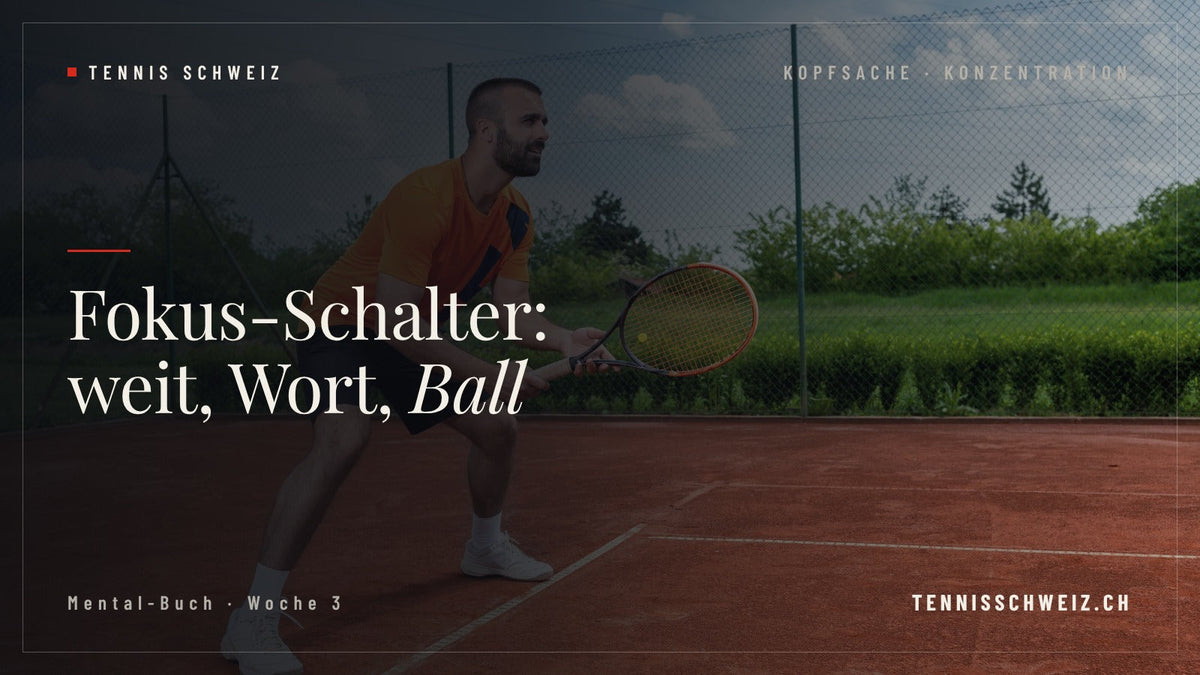
Concentration in tennis has four settings. If you know them, you notice sooner which one you are in and can switch. This post goes deeper into the focus switch from the post on concentration in tennis.
Four settings for your focus
In 1976 the sports psychologist Robert Nideffer described attention as a spotlight. The light falls wide or narrow. And it points outwards at the court or inwards at your thoughts.
- Wide and outward: You read the court. Where is your opponent standing, where is there open space?
- Wide and inward: You plan. What has worked, what will you play next?
- Narrow and inward: You gather yourself with a feeling or a word.
- Narrow and outward: You are with the ball, from its flight path to the contact point.
Which setting fits when
No setting is wrong. In a match you need all four, just at the right time. Between points the spotlight is wide. At the line it becomes narrow and points inwards. From the ball toss it points narrowly outwards.
It gets difficult when you stay stuck in one setting. If you are still turning over tactics during the ball toss, you are too wide. If you think only about the mishit ball between points, you are too narrow and miss what is happening on the other side.
Exercise: wide or narrow?
- Play a few games in practice and keep score.
- Ask yourself one question after every point: am I wide or narrow right now?
- If you are narrow on the last ball, lift your eyes and look at where your opponent is standing.
- If you are still planning at the line, say one word to yourself and look at the ball.
- After practice, note which setting you got stuck in most often.
Frequently asked questions about focus in tennis
Is a narrow focus better than a wide one?
No. Both have their job. With the wide focus you read and plan, with the narrow one you play the ball.
How do I notice that my focus is set wrongly?
Typical signs are thoughts about tactics during the shot, or brooding over the last mistake in the break between two points.
How quickly can switching be learned?
That varies. It helps to ask the question “wide or narrow?” in every practice until it becomes a habit.
How to practise it with the Mental Journal
“Focus” is the third week in the Mental Journal by Tennis Schweiz. Over seven days you find out where your thoughts wander and practise switching between wide and narrow. Each page takes about five minutes.
You will find more mental tips under All Kopfsache posts.